

Can I use AI (Artificial Intelligence) for photo-editing?
There has been a resurgence of chatter about Artificial Intelligence (AI) photo generation in the news lately- a la Kate Middleton’s official Instagram Mother’s Day post. People giving the image more than a passing glance noticed there was something off about the image- and it was discovered it was an image generated by an AI platform. This is hardly the first time someone has used an AI image generator to photoshop themselves, but the question is… should one? What are the consequences of using AI for photo editing casually and professionally? What are the consequences of using it for your headshot and branding images?
Let’s take a step back. Firstly- what are AI image generators? An Altexsoft article explains “AI image generators are trained on an extensive amount of data, which comprises large datasets of images. Through the training process, the algorithms learn different aspects and characteristics of the images within the datasets.” Long story short, they are platforms that generate images based on user commands from large amounts of data. The two most common ways to use this technology are by asking AI to change an image you give it or it can create entirely new images from prompts you provide.
AI image generator technology is so new, that many people do not think to consider if an image is AI created. They may scroll by a picture, assuming it’s “real.” When someone spends more than a few seconds looking at an image, then there are issues. AI is not good at editing or generating images of humans that truly look like humans. The images created or altered are “off.” The light is gone from people’s eyes, they may have too many fingers (AI has lots of issues with hands), smiles look plastered on, and skin looks like plastic. These slight issues may not be readily apparent in passing but upon further inspection, humans notice, and we get the “ick.” The “ick” is called “uncanny valley” a term created in 1970 for the uneasy emotional response that is evoked when robots and AI images have human-like characteristics.
So back to our questions; should one use AI image generators to create photoshopped headshots or generate branding images from selfies? Considering the issues that AI has with photo generation, do you really want your branding images to give people the “ick?” Heck no!
Rebecca Knight, a writer for the Business Insider, shared her AI-generated headshots. She found hilarity in the results. While AI was able to give her different hairstyles, locations, and clothing, it took away the life in her eyes, it plasticized her skin, and it took away any genuineness in her features.
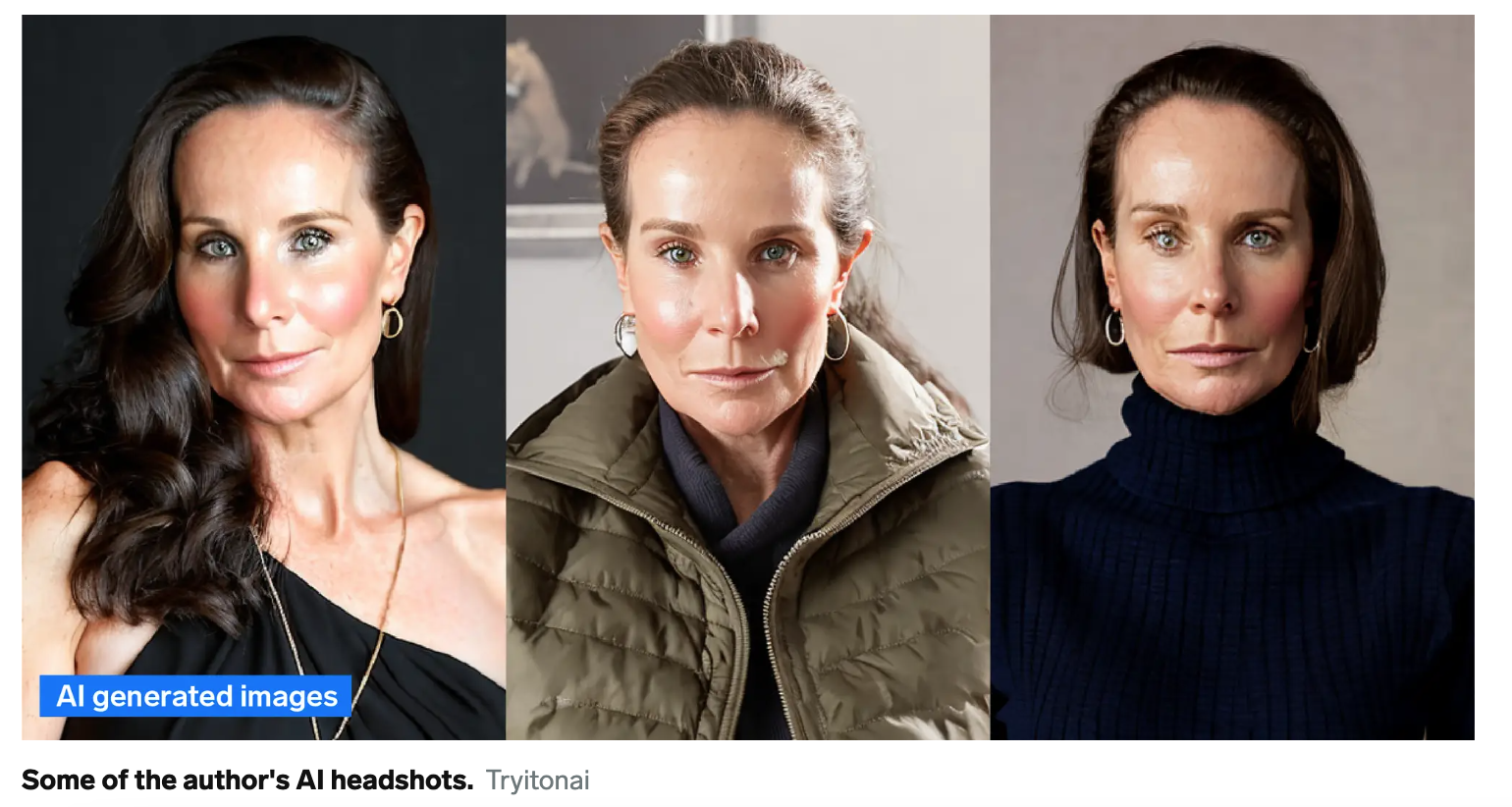
While there is humor in seeing the results, this should give us pause. The goal of professional headshots is to present the best version of yourself as you promote your company. Knight’s AI images do not elicit feelings of trust or honesty; cornerstones of all reputable businesses. These images leave you with that Uncanny Valley “ick” feeling and the subconscious question; “What is she hiding? Why isn’t she being truthful about her headshot and brand?”
With Bridgette's expertise and passion, your professional headshots are an investment and tangible portrayal of your best self, the embodiment of all your hard work, honesty, and passion for your brand. Those are features and qualities that people will stop scrolling by and notice and no AI could ever hope to replicate.
Sources:
https://www.altexsoft.com/blog/ai-image-generation/
https://www.businessinsider.com/ai-professional-headshots-pictures-job-search-2023-4
https://www.npr.org/2023/06/07/1180768459/how-to-identify-ai-generated-deepfake-images